



EMDR
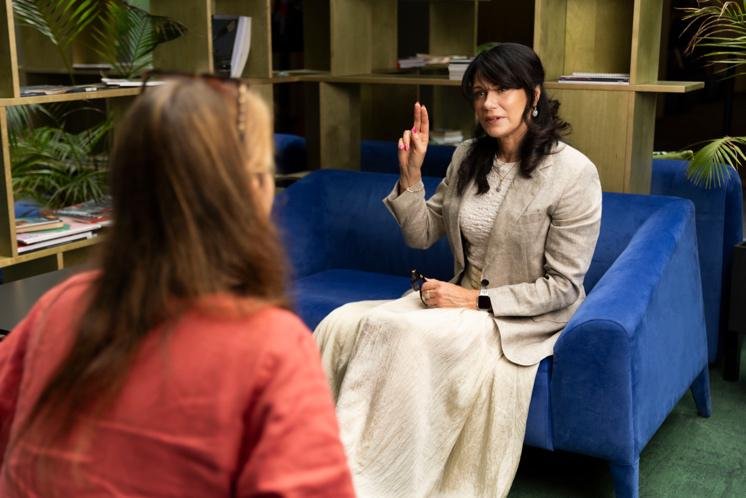
When past experiences still affect present life
Sometimes people realise that certain events ended long ago, yet their impact is still felt. Memories evoke strong emotions, fears recur, as well as anxiety and self-doubt, or it becomes difficult to respond calmly in certain situations. This happens because not all experiences are fully processed within the nervous system.
EMDR therapy helps integrate these experiences so that they no longer control a person’s emotions, reactions, and life choices.
EMDR (Eye Movement Desensitisation and Reprocessing) is an evidence-based psychotherapeutic method designed for the reprocessing of traumatic and emotionally challenging experiences.
This method was developed by American psychologist Francine Shapiro, and today it is used worldwide to work through trauma, anxiety, panic attacks, bereavement, negative beliefs, and other emotionally challenging experiences.
EMDR is considered one of the most researched and effective methods in the field of trauma therapy (with a treatment efficacy of 77–90%).
This technique fascinated me with its precision and rapid results. In quite a few cases, a single session was enough to resolve the issue (fear, phobia, grief of bereavement, childhood traumatic experience, etc.). Naturally, the result also depends on how deep and complex the issue is and how many defences a person has consciously or subconsciously constructed.
How does EMDR work?
Sometimes, following intense emotional distress or traumatic experiences, the brain is unable to fully process what happened. As a result, memories become, as it were, 'stuck' alongside fear, anxiety, guilt, or other intense emotions. Even years later, certain situations can trigger the exact same reactions, as though everything were happening all over again.
EMDR therapy helps the brain complete this natural information processing mechanism. During therapy, the client briefly focuses on a specific memory while the therapist applies bilateral stimulation—eye movements, alternating hand tapping, or auditory signals.
This helps the brain safely reprocess the emotional experience, reduce its impact, and integrate it into overall life experience. The memory remains, but it no longer elicits such a strong emotional or physical response.
EMDR does not help you forget the past—it helps you break free from its impact and live in the present.
In my work, EMDR I use it not as a standalone technique, but as one of the most crucial Phoenix Method components. I combine it with the principles of psychosomatics, subconscious work, and the analysis of a person's life story. Such an approach makes it possible to see not only the specific problem, but also its entire context.
It is important to me that a person not only reduces their symptoms, but also understands themselves and their reactions better, and is able to build a new relationship with life. When past experiences no longer govern the present, there is greater inner freedom, peace, self-confidence, and the opportunity to make choices based on what one genuinely desires rather than out of fear.
Every change begins with a first step. Get in touch for a consultation, and together we will find the path to greater inner peace, emotional freedom, and an improved quality of life.